ppc64le/linux-1.0.0/: msgspec-0.19.0 metadata and description
A fast serialization and validation library, with builtin support for JSON, MessagePack, YAML, and TOML.
| classifiers |
|
| description_content_type | text/markdown |
| dynamic |
|
| keywords | JSON msgpack MessagePack TOML YAML serialization validation schema |
| license | BSD |
| license_file |
|
| maintainer | Jim Crist-Harif |
| maintainer_email | [email protected] |
| metadata_version | 2.4 |
| project_urls |
|
| provides_extras |
|
| requires_dist |
|
| requires_python | >=3.9 |
| File | Tox results | History |
|---|---|---|
msgspec-0.19.0-cp310-cp310-linux_ppc64le.whl
|
|
|
msgspec-0.19.0-cp311-cp311-linux_ppc64le.whl
|
|
|
msgspec-0.19.0-cp312-cp312-linux_ppc64le.whl
|
|
|
msgspec-0.19.0-cp313-cp313-linux_ppc64le.whl
|
|
|
msgspec-0.19.0-cp39-cp39-linux_ppc64le.whl
|
|






msgspec is a fast serialization and validation library, with builtin
support for JSON, MessagePack,
YAML, and TOML. It features:
-
🚀 High performance encoders/decoders for common protocols. The JSON and MessagePack implementations regularly benchmark as the fastest options for Python.
-
🎉 Support for a wide variety of Python types. Additional types may be supported through extensions.
-
🔍 Zero-cost schema validation using familiar Python type annotations. In benchmarks
msgspecdecodes and validates JSON faster than orjson can decode it alone. -
✨ A speedy Struct type for representing structured data. If you already use dataclasses or attrs, structs should feel familiar. However, they're 5-60x faster for common operations.
All of this is included in a lightweight library with no required dependencies.
msgspec may be used for serialization alone, as a faster JSON or
MessagePack library. For the greatest benefit though, we recommend using
msgspec to handle the full serialization & validation workflow:
Define your message schemas using standard Python type annotations.
>>> import msgspec

>>> class User(msgspec.Struct):
...     """A new type describing a User"""
...     name: str
...     groups: set[str] = set()
...     email: str | None = None
Encode messages as JSON, or one of the many other supported protocols.
>>> alice = User("alice", groups={"admin", "engineering"})

>>> alice
User(name='alice', groups={"admin", "engineering"}, email=None)

>>> msg = msgspec.json.encode(alice)

>>> msg
b'{"name":"alice","groups":["admin","engineering"],"email":null}'
Decode messages back into Python objects, with optional schema validation.
>>> msgspec.json.decode(msg, type=User)
User(name='alice', groups={"admin", "engineering"}, email=None)

>>> msgspec.json.decode(b'{"name":"bob","groups":[123]}', type=User)
Traceback (most recent call last):
  File "<stdin>", line 1, in <module>
msgspec.ValidationError: Expected `str`, got `int` - at `$.groups[0]`
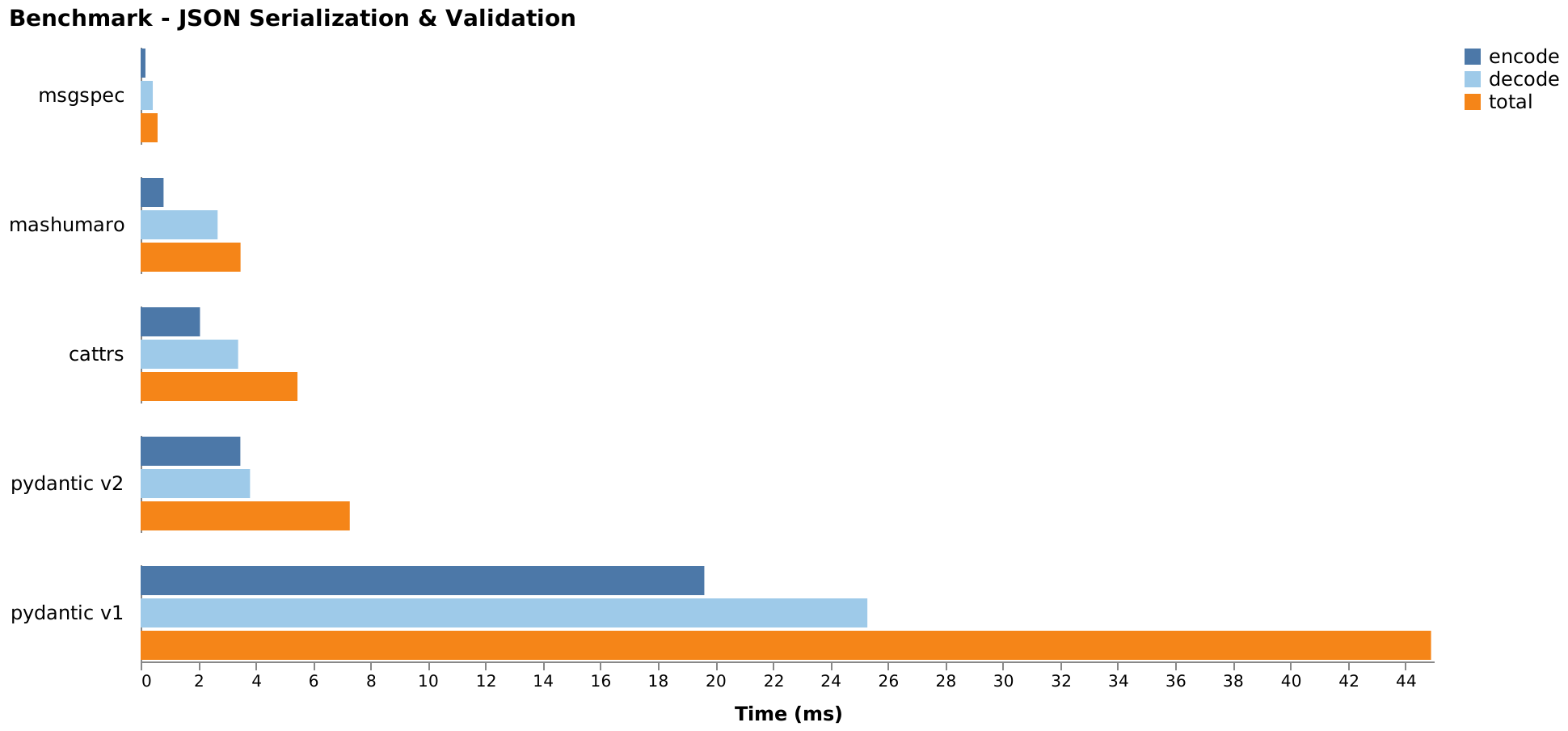
msgspec is designed to be as performant as possible, while retaining some of
the nicities of validation libraries like
pydantic. For supported types,
encoding/decoding a message with msgspec can be
~10-80x faster than alternative libraries.
See the documentation for more information.
LICENSE
New BSD. See the License File.